
An alphabet carved into stone
After a few visits to the rune chart, I’d suggest looking at the Kylver stone. It dates to the fifth century, well before the Viking Age, and carries the older row of 24 runes. The Swedish History Museum describes the sequence as an alphabet, rather than a sentence. [1]
That makes it a lovely next step. You can look for letters you already know without having to translate a passage first. I’d keep the photograph and the chart open together and see where your eye starts to recognize a shape.
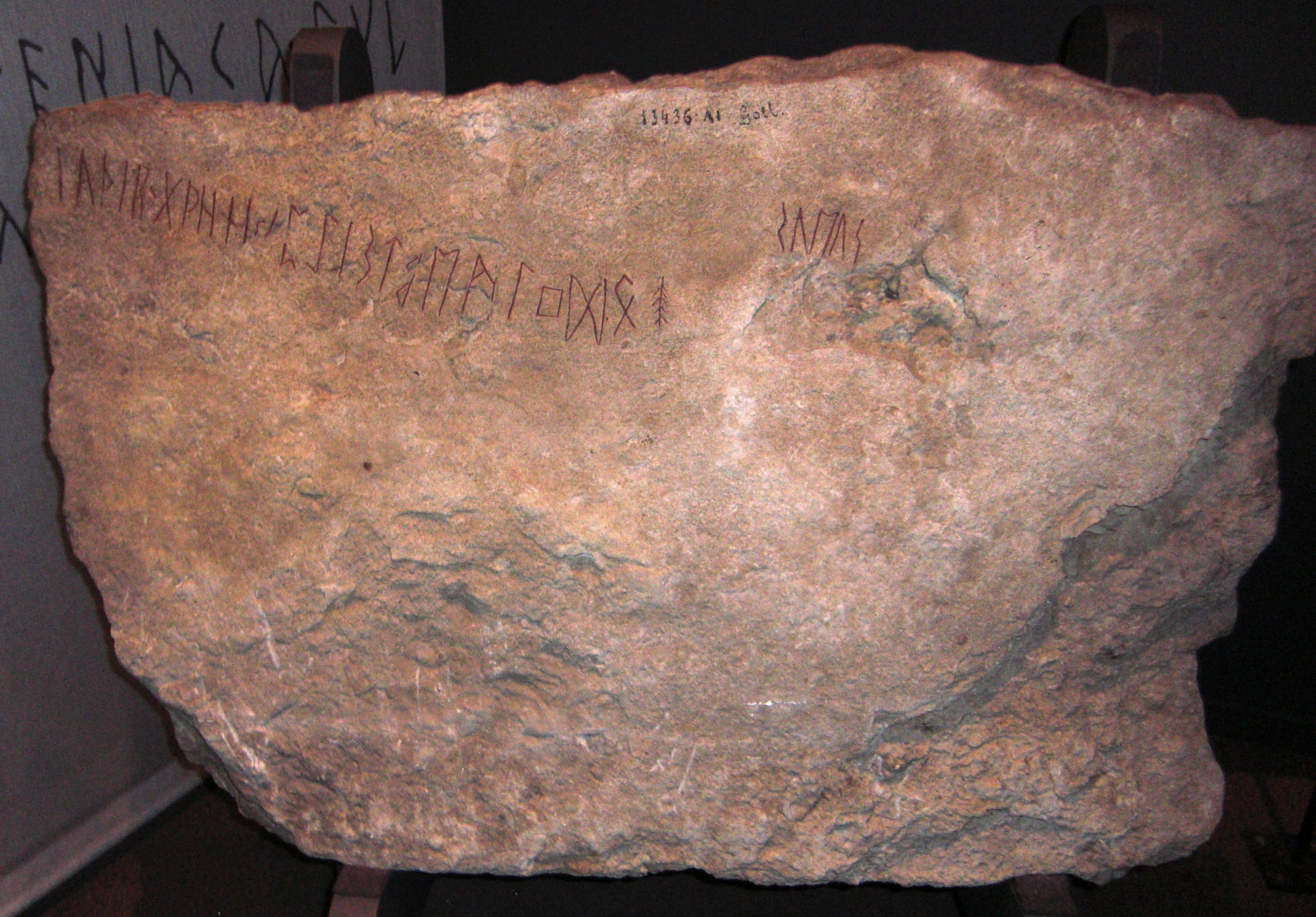
What the photograph adds
Pick a couple of runes and look closely at their branches, their spacing, and the cuts around them. Then find them on the chart. They may be easy to match, but they won’t look exactly alike.
A font gives us tidy shapes that are easy to compare. The stone gives us the marks someone actually made, along with the wear and damage that came later. I find the comparison more interesting when I let both do their job: the chart helps me recognize a letter, and the photograph gives me a reason to look again.
The mark at the end
There’s a tree-like mark after the rune row that’s harder to explain. The museum discusses several possibilities, including repeated t-runes and a sign connected with a cipher, but the carver’s intention remains uncertain. [1]
I’d leave that question open. You can notice the shape, sketch it, or compare it with the letters nearby without having to decide what it means.
If you’d like to try a small exercise, choose three neighboring runes on the chart and find them in the photograph. Then go the other way: pick a few marks on the stone and look them up. When you’re ready to try a word instead of an alphabet, the Vimose comb has just five letters to work through.
Sources and reading notes
- Swedish History Museum: KylverstenenMuseum account of the fifth-century rune row and the uncertain final sign.


